
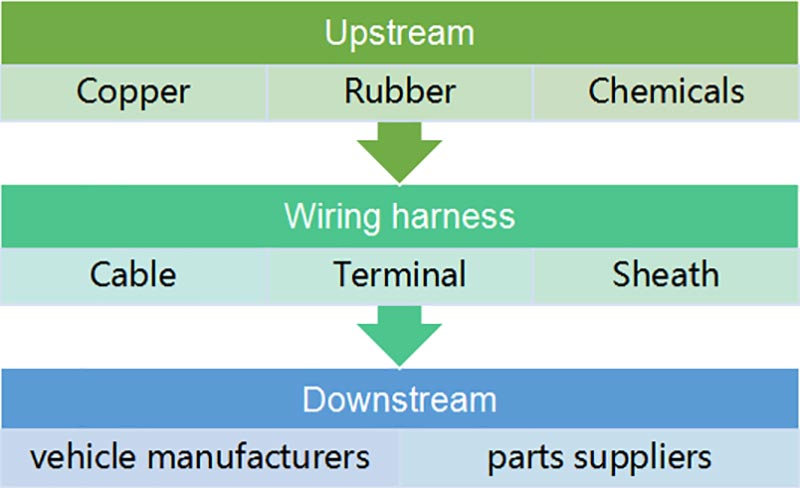
From the perspective of upstream industries, the main raw materials for the automotive wire harness industry are wires, terminals, sheaths, and seals, involving materials such as copper, rubber, and plastics. Prices are primarily determined by the market prices of commodities such as copper, petroleum, natural rubber, and other chemical materials.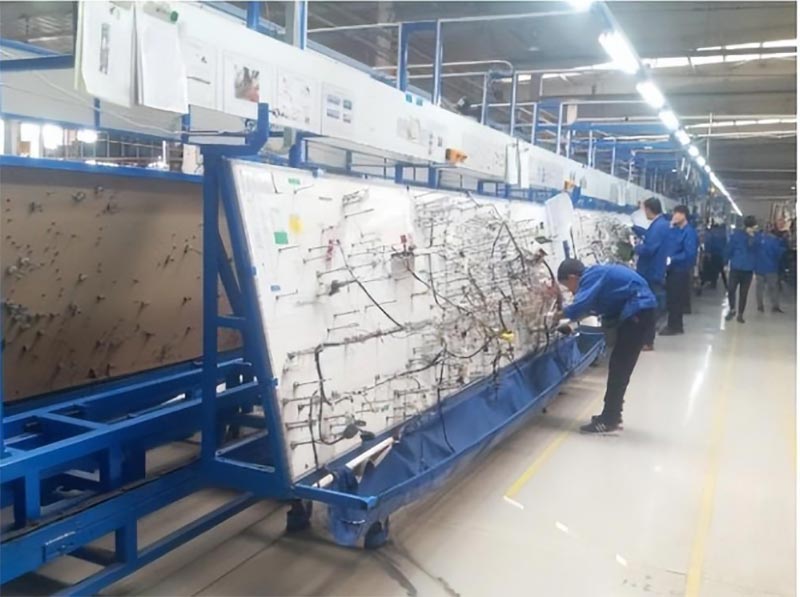
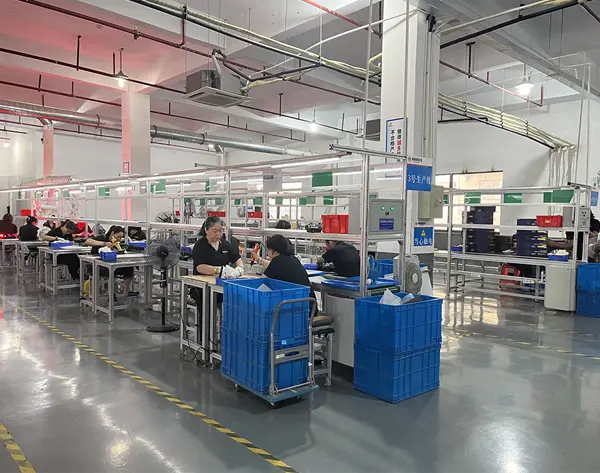
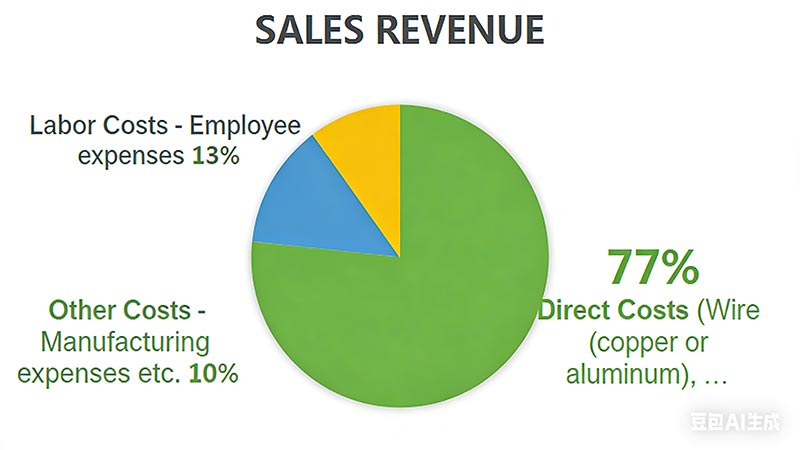
The automotive wiring harness industry is a typical labor-intensive industry, requiring a large amount of manual labor for assembly line operations such as insertion, wiring, insulation, and bundling during the manufacturing process. According to Huaguang Co., Ltd.'s 2021 annual report, the proportion of direct material costs and labor costs in wiring harness manufacturing is as follows:
Among all raw materials, cables (wires), sheaths, and terminals account for the top three proportions. According to the prospectus of Huguang Co., Ltd., in 2019, the proportions of cables, sheaths, and terminals in the company's total procurement amount were as follows:
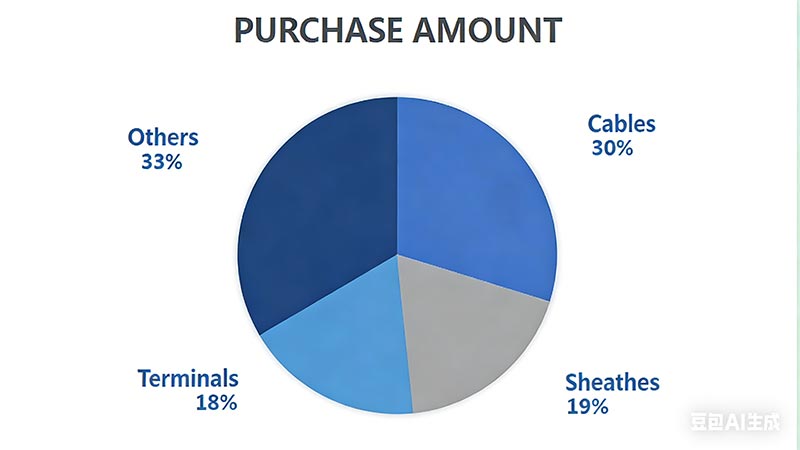
The proportion of the top three raw materials purchased remains relatively stable. Copper is the core material for cables, therefore the cost of copper materials constitutes the absolute majority of cable costs, mainly consisting of copper rods and copper wires. Copper materials account for over 80% of the main operating costs of cable manufacturers.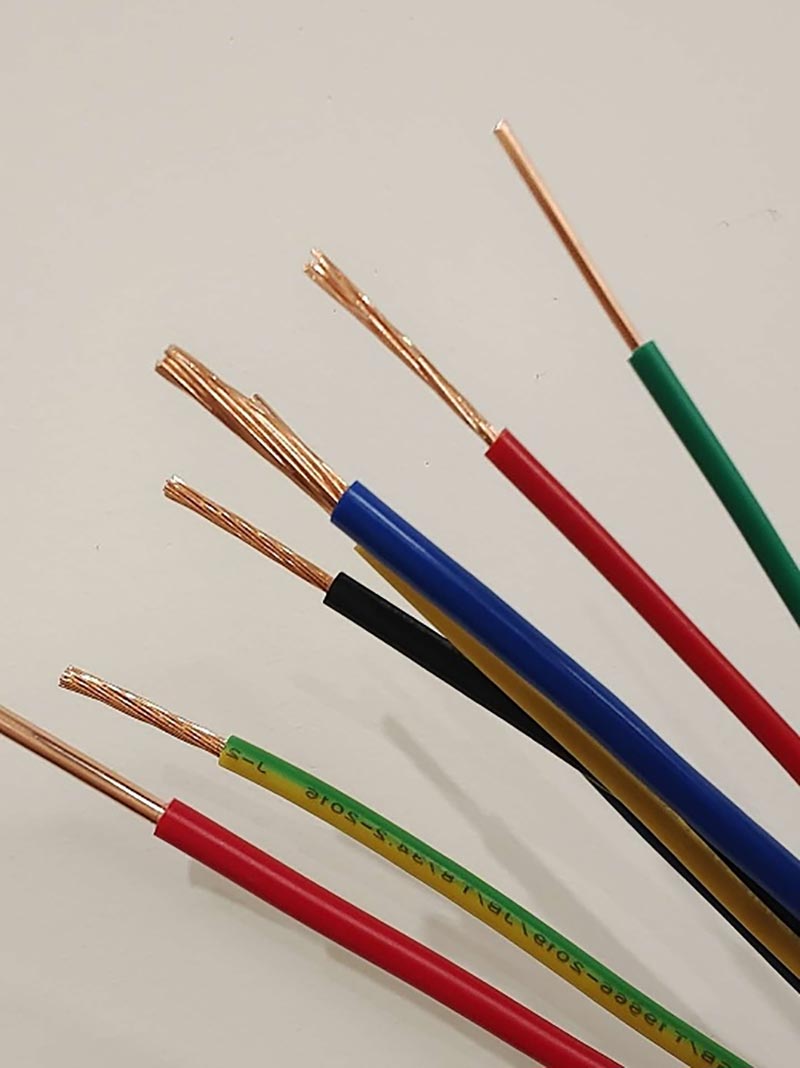
Automotive wiring harnesses are automotive components, occupying a midstream position in the entire automotive industry chain. Their upstream suppliers include copper, rubber, and chemical products, while their downstream customers are vehicle manufacturers and some parts suppliers.
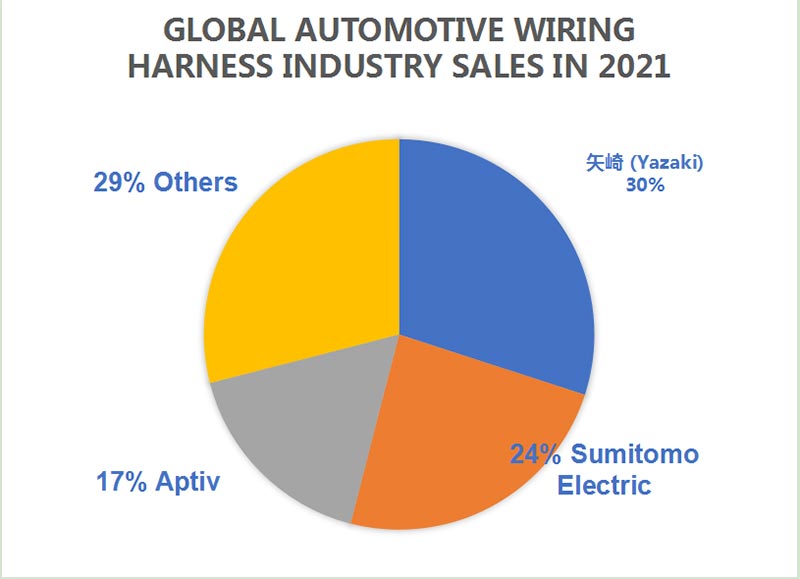
In 2021, the global automotive wire harness industry's CR3 (concentration ratio of the top three companies) was 71%, with the top three being Yazaki, Sumitomo, and Aptiv. In the domestic market, large domestic automobile manufacturers mostly have stable partnerships with local wire harness manufacturers. With the rise of domestic brands, a number of domestic wire harness companies have emerged, such as Huguang Co., Ltd., Shanghai Jinting, and Henan Tianhai.
Market Size and Forecast - In 2023, the global automotive wire harness market size was US$49.73 billion. It is projected to increase to US$81.94 billion by 2032, with a compound annual growth rate (CAGR) of 5.8% during the period.
Regional Market Distribution - The Asia-Pacific region is the largest regional market, accounting for 41.12% of the market share in 2023.
Core Growth Drivers - The popularization of new energy vehicles is key to industry growth. Compared to traditional fuel vehicles, new energy vehicles have an average wire harness price of approximately 5,000 RMB due to the addition of high-voltage wire harnesses, significantly higher than fuel vehicles (the wire harness prices for low, medium, and high-end models are approximately 2,500 RMB, 3,500 RMB, and 5,000 RMB respectively). This drives the continuous increase in per-vehicle value and overall market size, which is expected to exceed 100 billion RMB.
Electric Vehicle Market Background - The new energy vehicle market itself is expanding rapidly. For example, global electric vehicle sales increased by approximately 51% year-on-year in 2024. In regional markets, Europe and China have become dominant, with electric vehicle sales reaching approximately 1.3 million units in both regions in 2020, four times the sales in the United States.