In road transportation scenarios, trailer lights may seem like insignificant accessories, but they are actually an "important language" for ensuring the safe operation of vehicle formations. Whether it is a heavy semi-trailer, a light recreational trailer, or a temporary cargo trailer, the normal operation of its lighting system is directly related to the life safety of the driver, passengers and other road users. This article will comprehensively analyze the "guardian of road safety" of trailer lights from four dimensions: functional positioning, type classification, usage norms, and maintenance points.
I. Core Function of Trailer Lights: Transmitting key driving signals
The core value of trailer lights lies in replacing the main vehicle's light signals that are blocked by the trailer and establishing communication with other vehicles through standardized light language. Its main functions can be classified into three major categories:
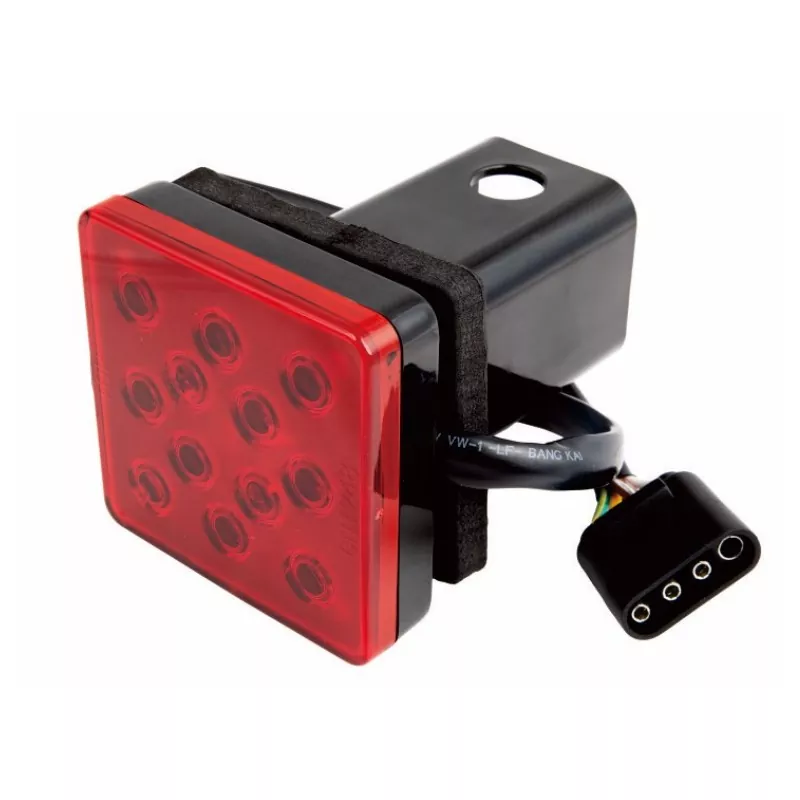
Warning functions: including brake lights, turn signals and hazard warning flashers. When the main vehicle brakes, the brake light of the trailer lights up with a strong red glow, reminding the vehicle behind to slow down in time. Turn signals clearly inform surrounding vehicles of their intention to change lanes or turn by alternately flashing yellow light from left to right. The hazard warning flashers are used in emergency situations such as vehicle breakdowns and temporary parking to alert oncoming vehicles to keep a safe distance in the dual-flash mode.
Lighting functions: mainly refer to trailer taillights and reversing lights. The taillights continuously emit a red glow at night or in low visibility conditions, outlining the trailer's profile and helping other vehicles determine the trailer's length and width. The reverse lights automatically turn on white when the vehicle is in reverse gear, illuminating the road behind the trailer and simultaneously alerting pedestrians and vehicles behind to give way.
Identification functions: Some large trailers are also equipped with outline lights and reflective strips. Outline lights are installed on the top and sides of the trailer, marking the vehicle's contour range with low-power red or yellow light. The reflective strips, by means of the principle of light reflection, produce high-brightness reflections when illuminated by the lights of other vehicles at night, further enhancing the presence of the trailer.
We use cookies to offer you a better browsing experience, analyze site traffic and personalize content. By using this site, you agree to our use of cookies.Privacy Policy